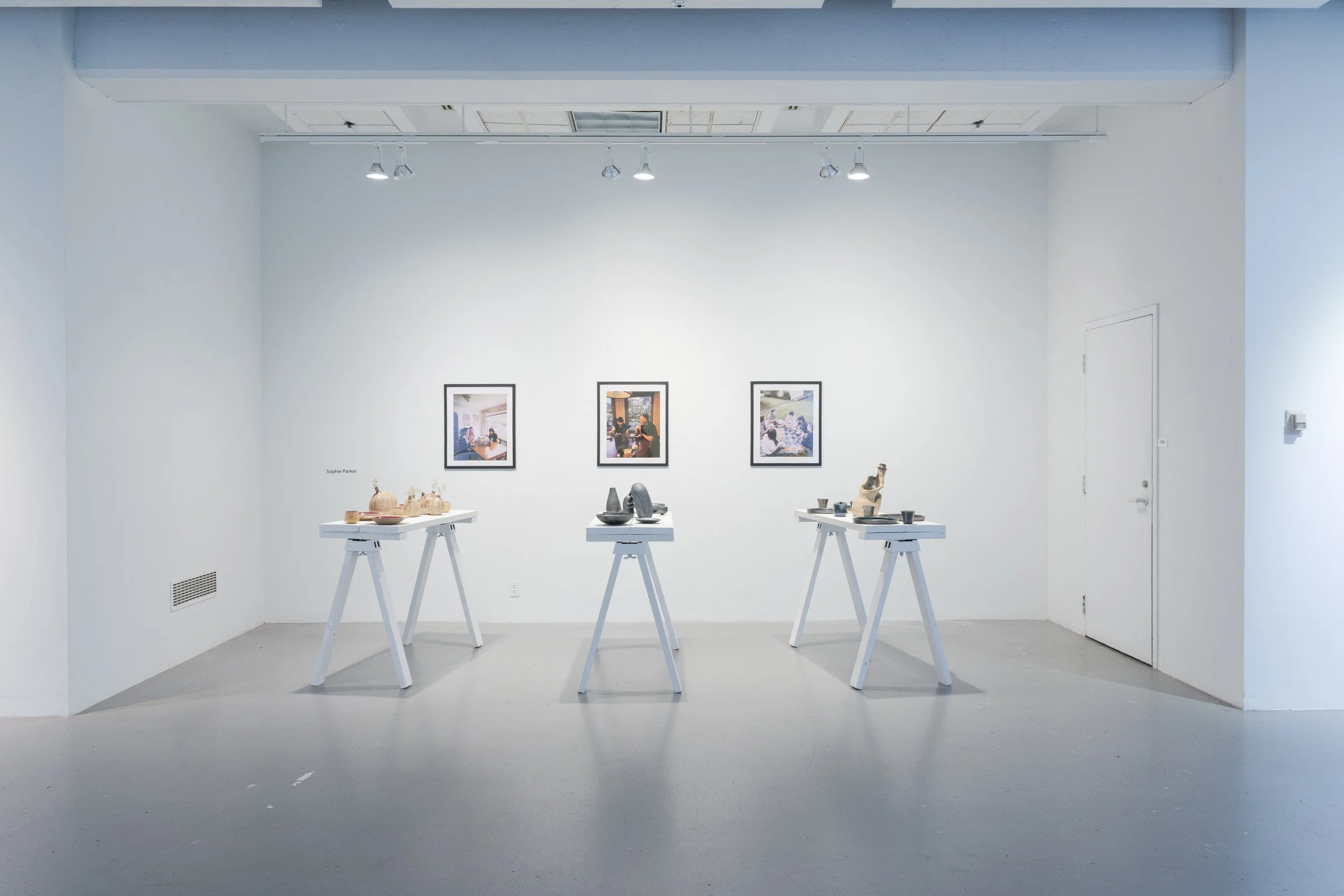
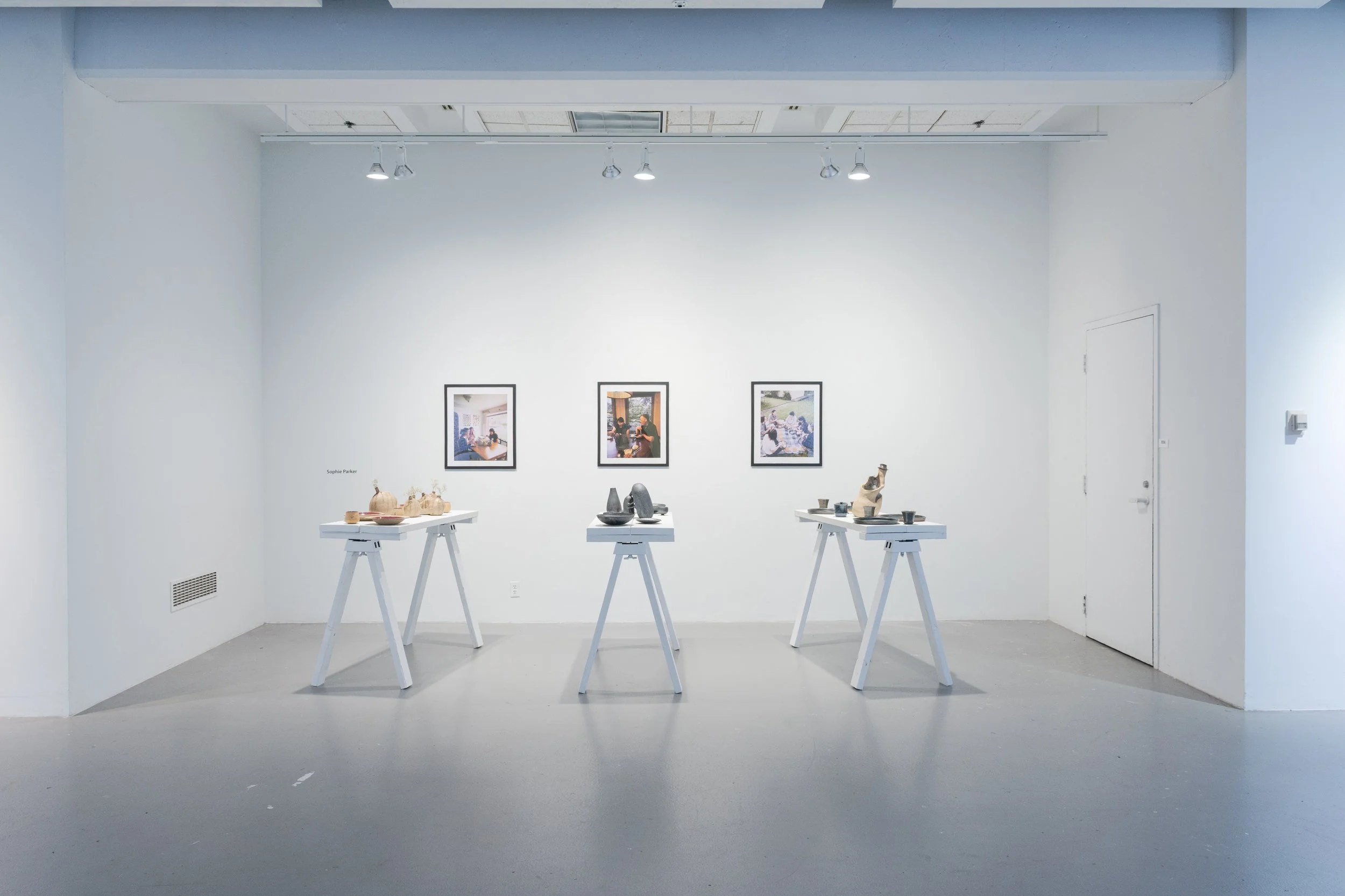
BFA Thesis Exhibition
LaVerne Krause Gallery, Eugene, OR
May 18 - May 21, 2026
Photographs: Jonathan Bagby
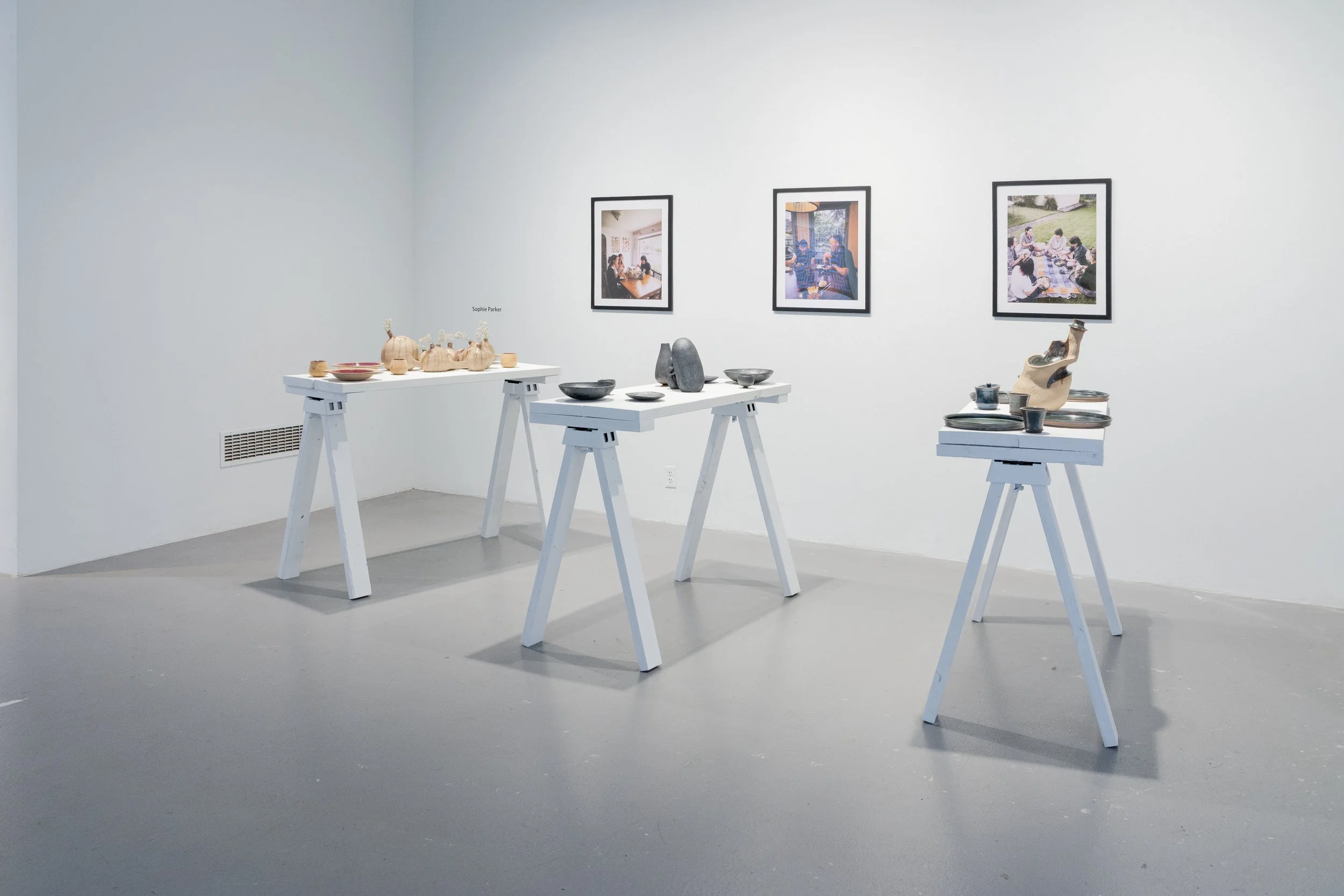
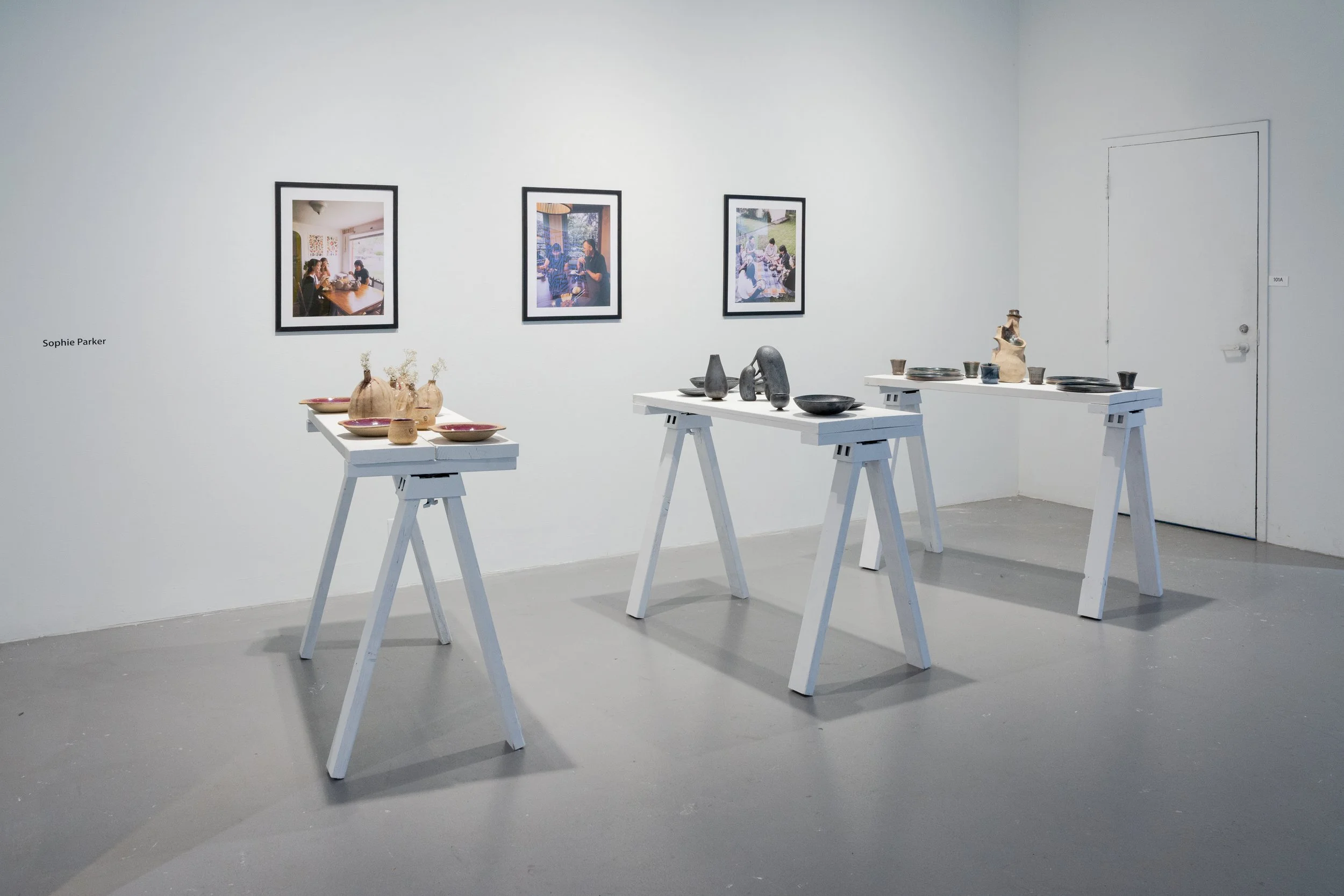
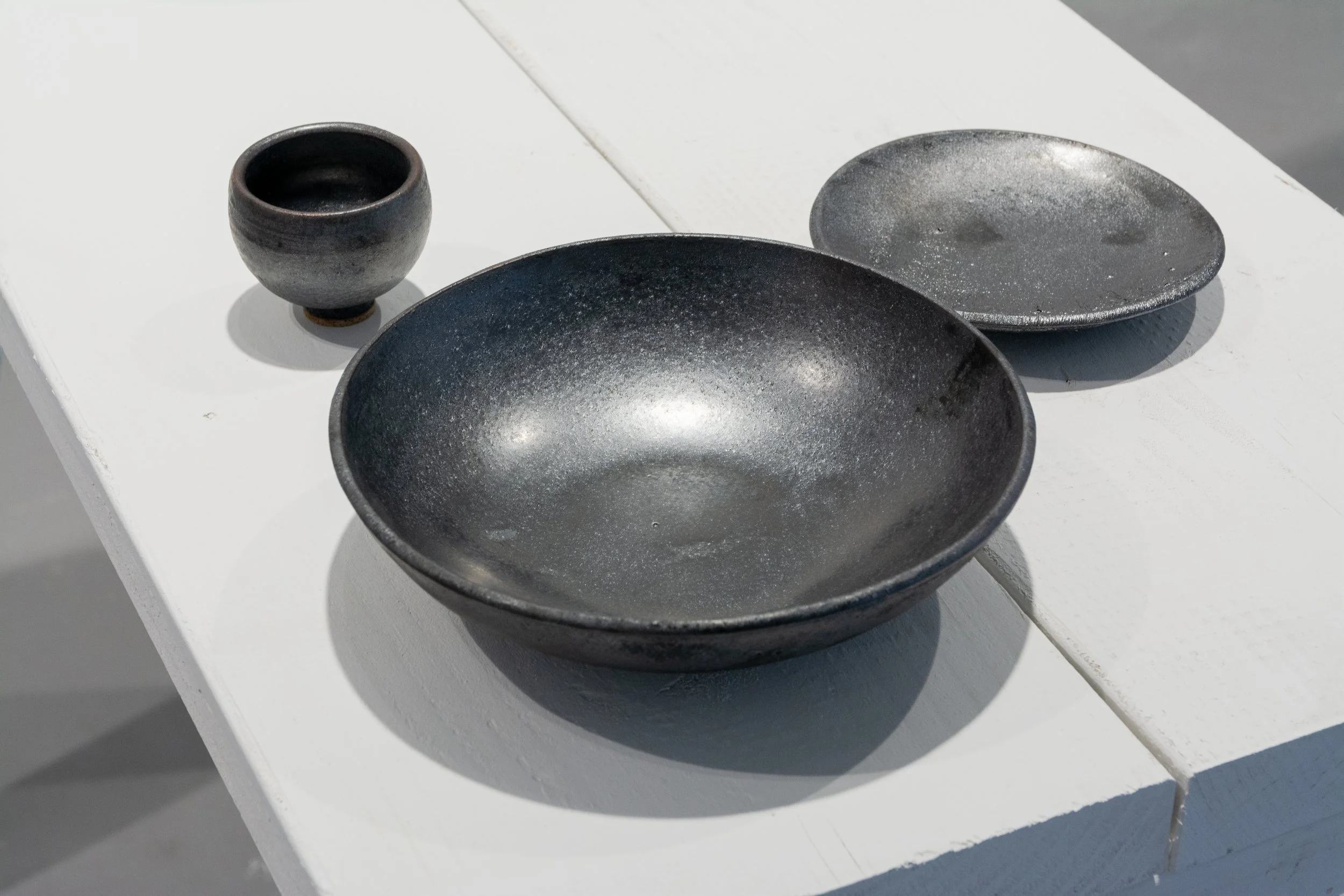
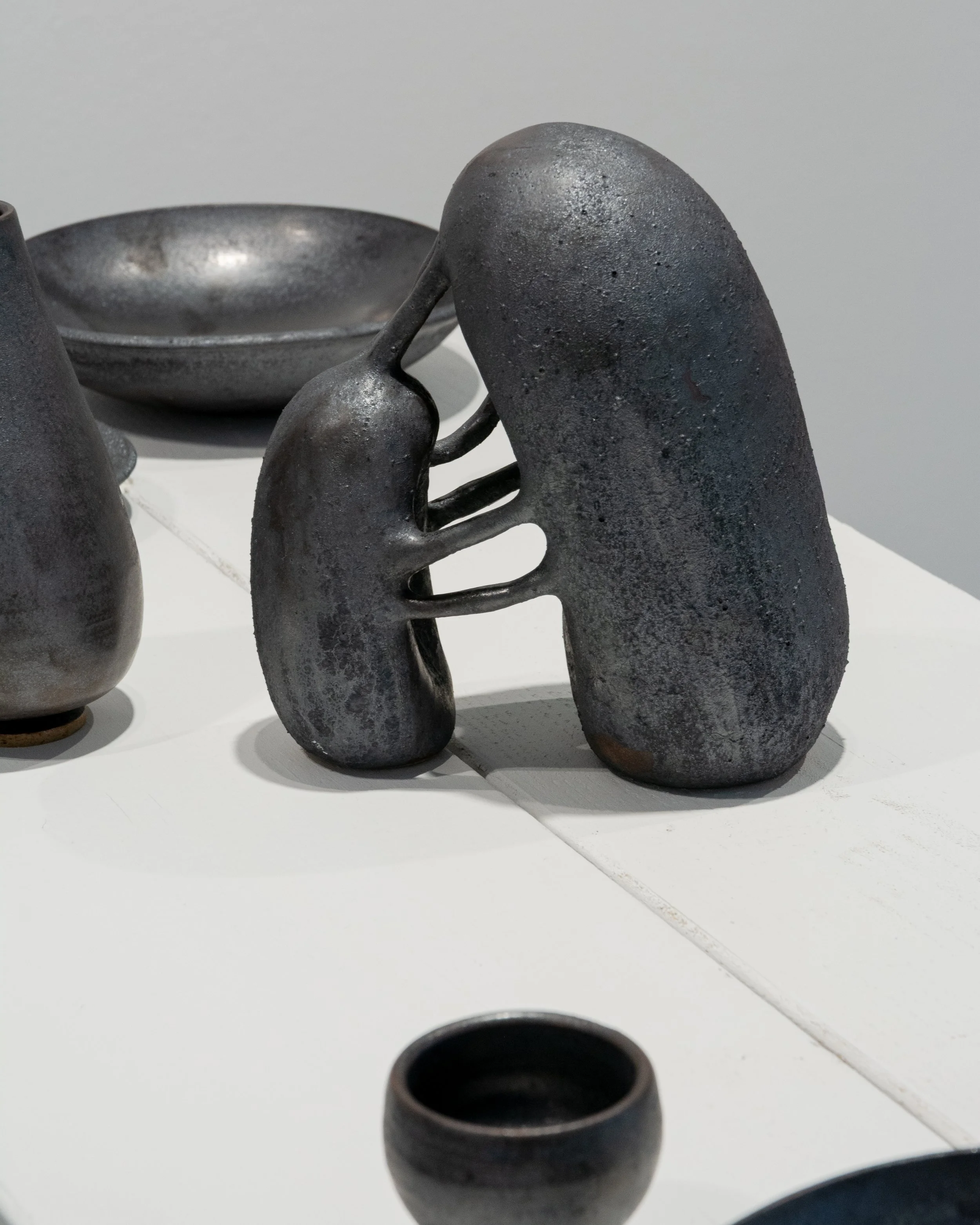
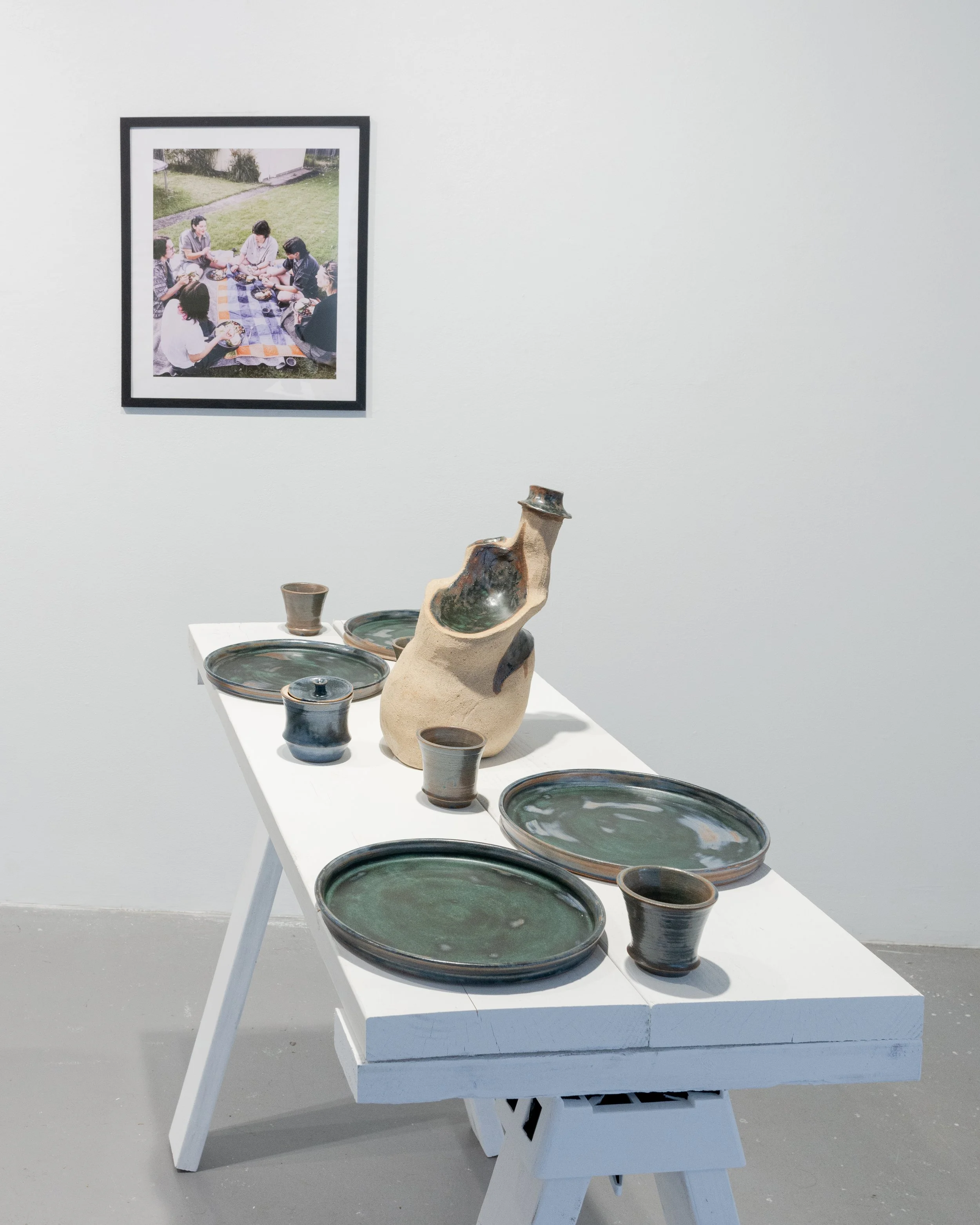
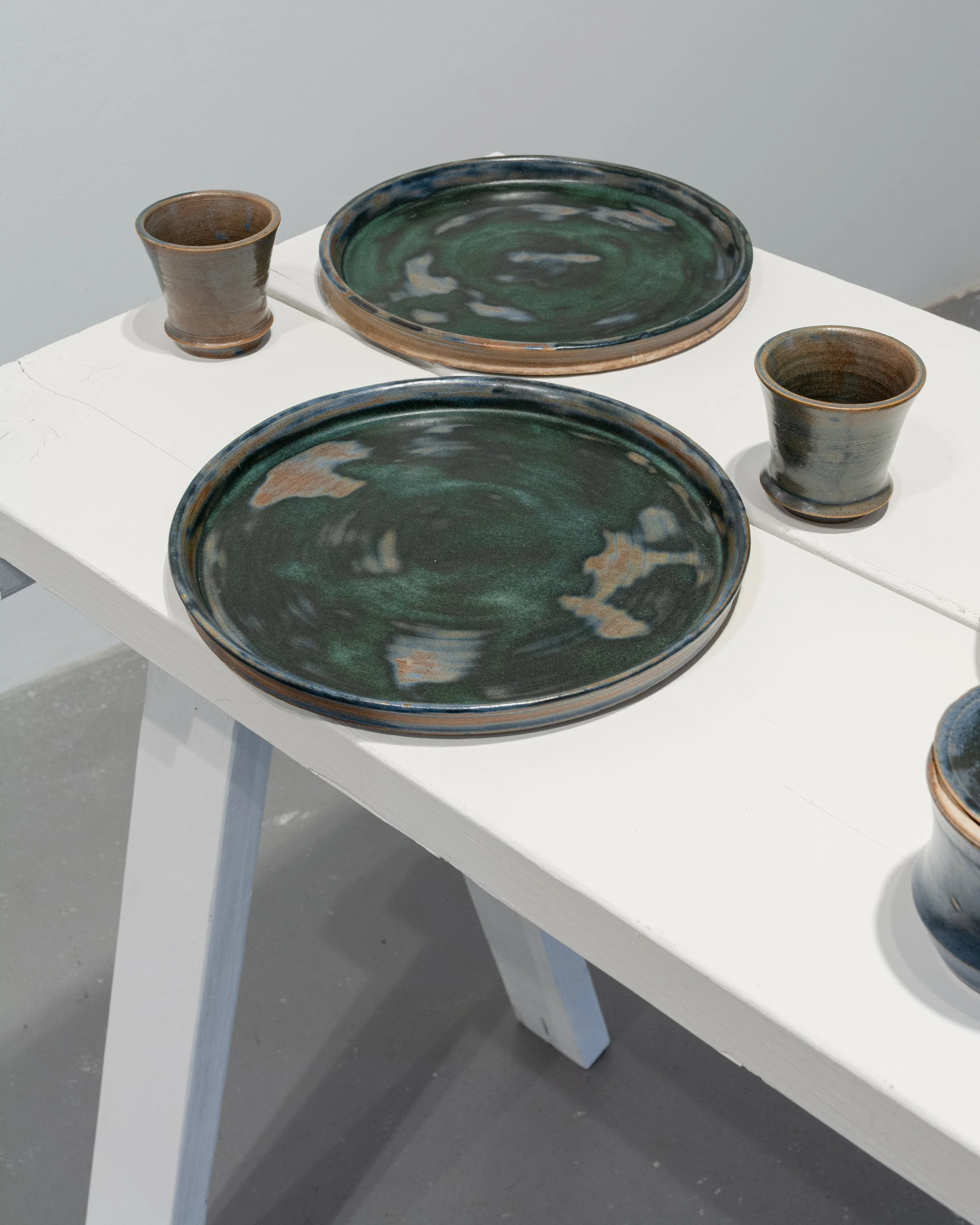
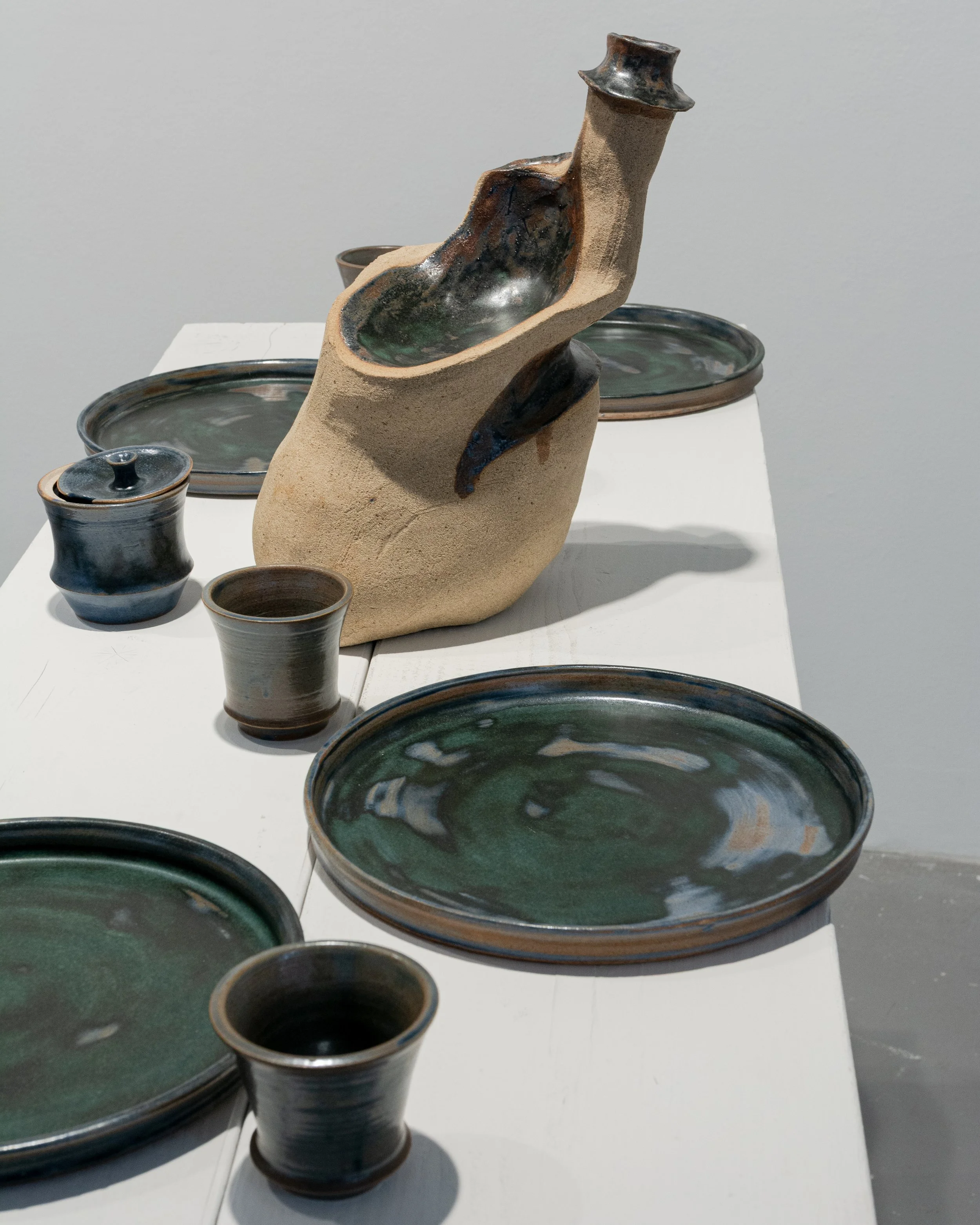
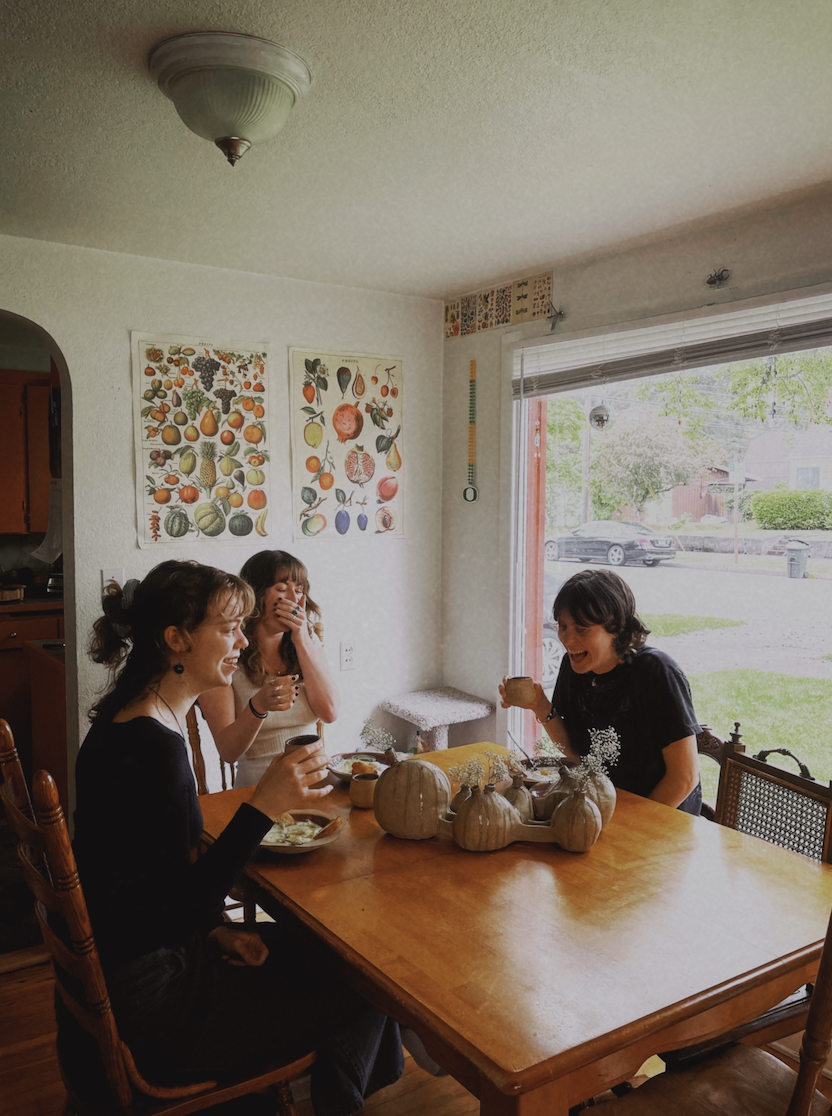
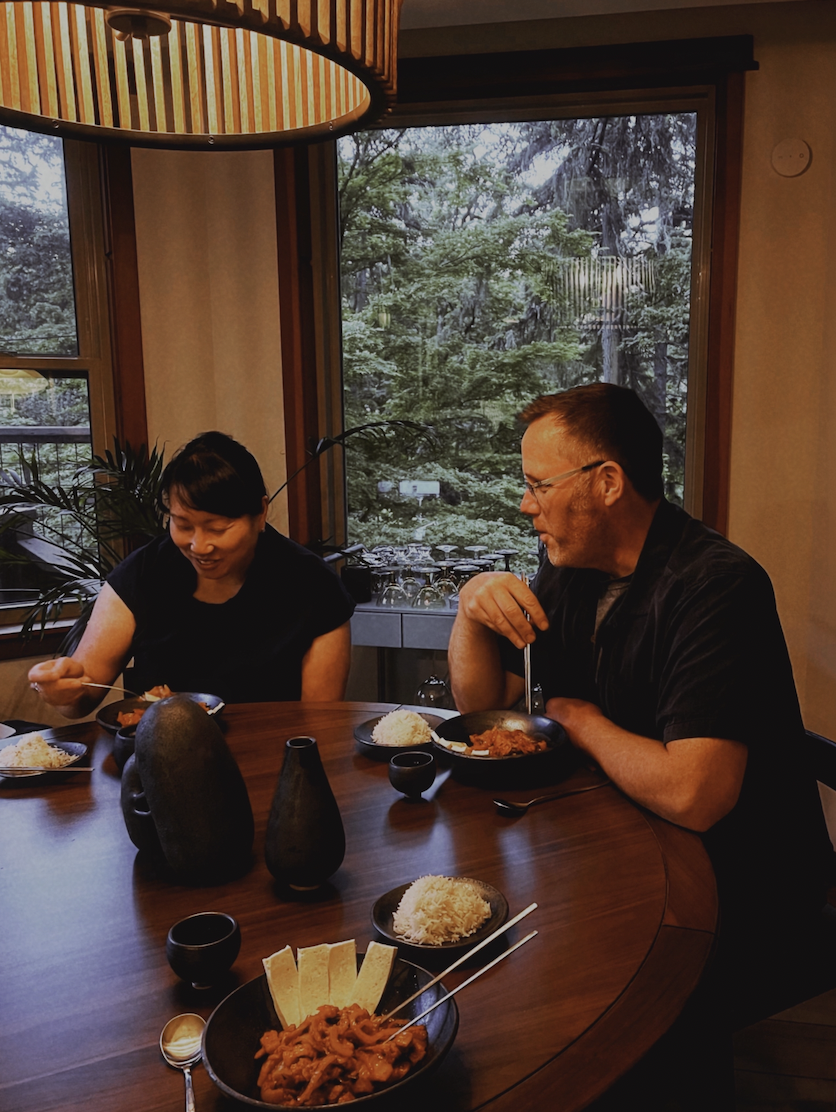
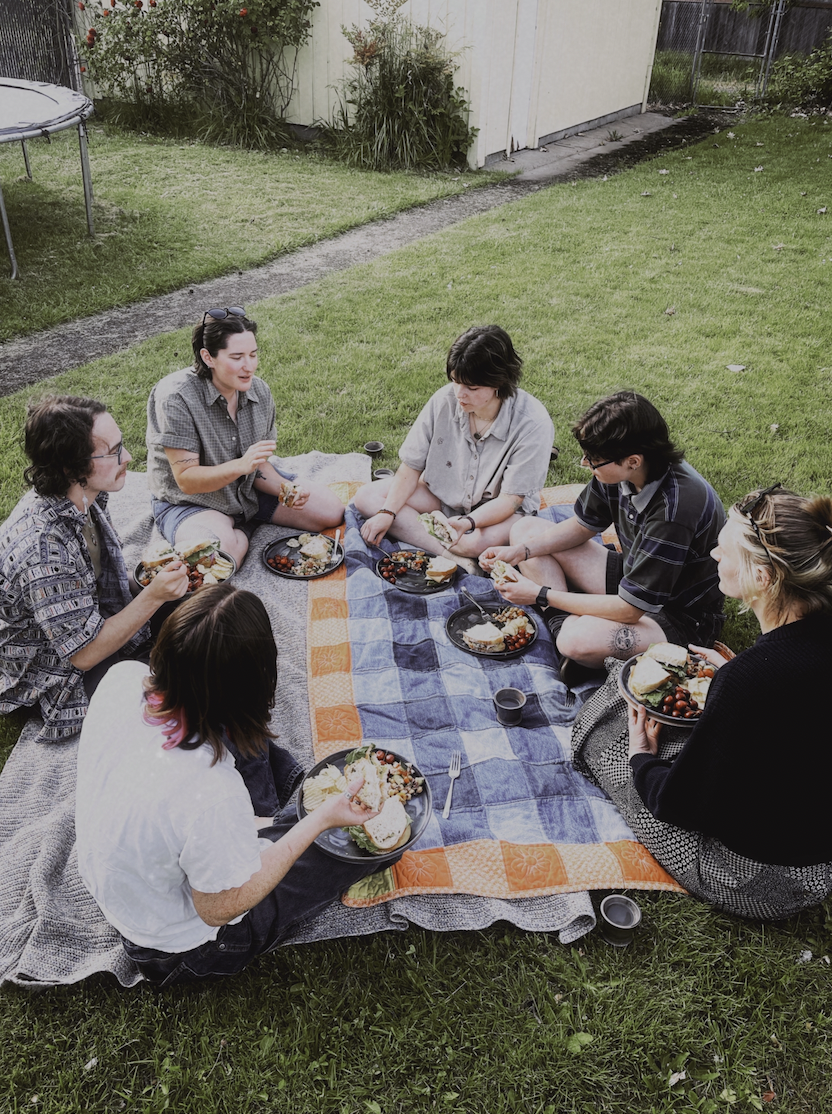
Food Documentation
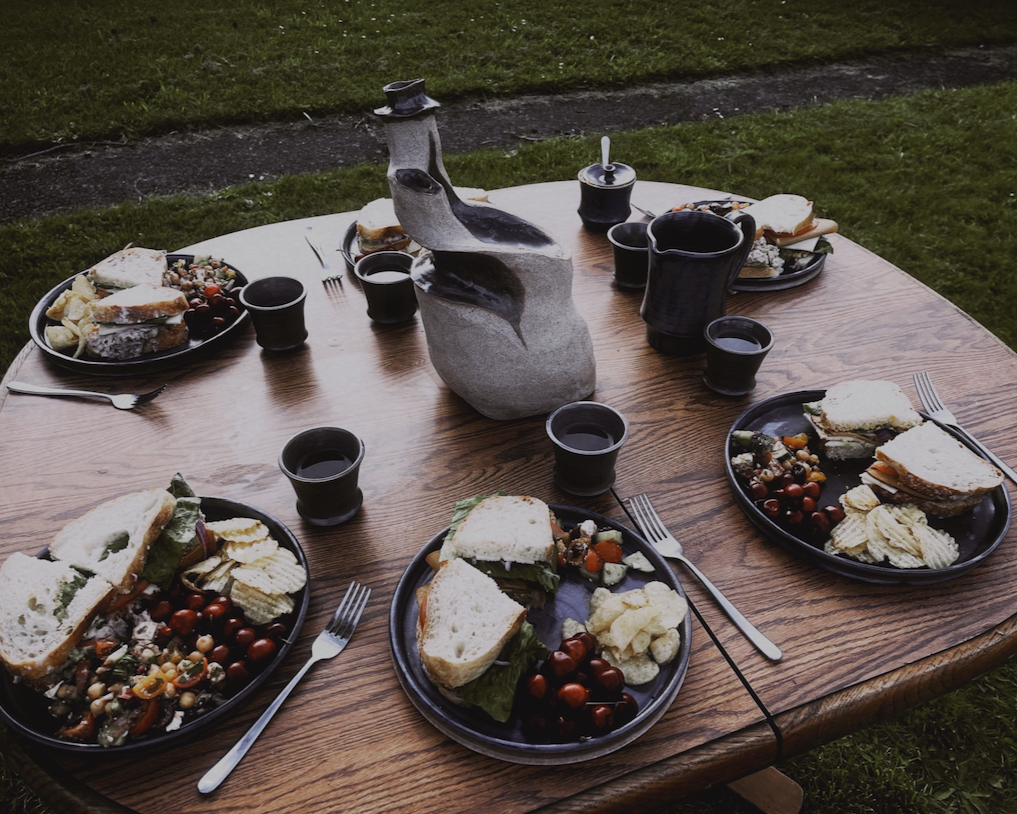
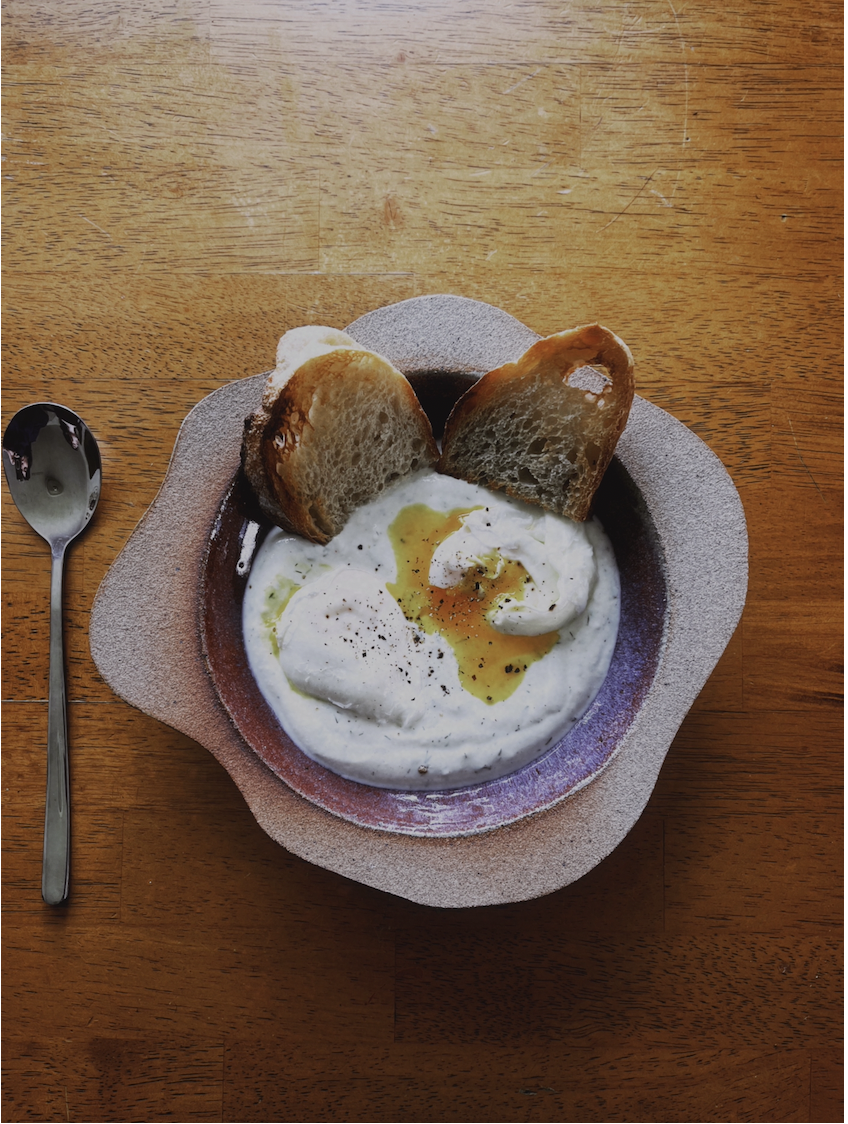
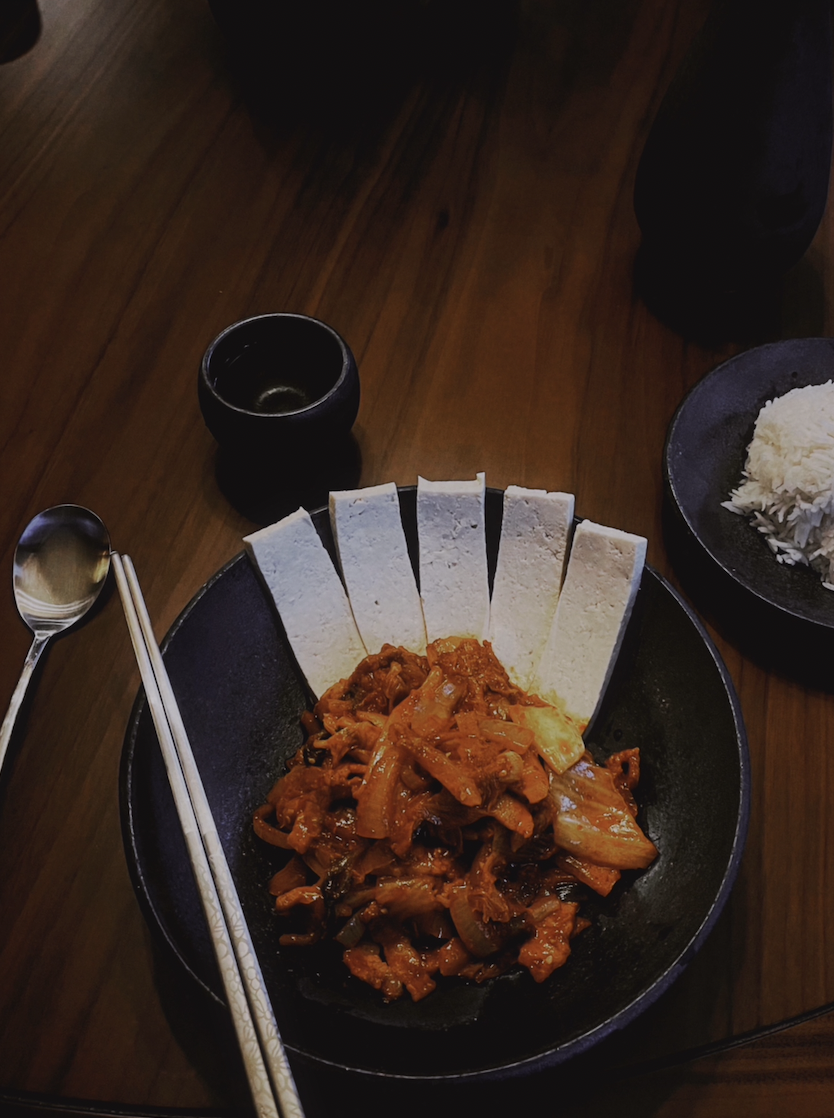
Meal Documentation
Statement
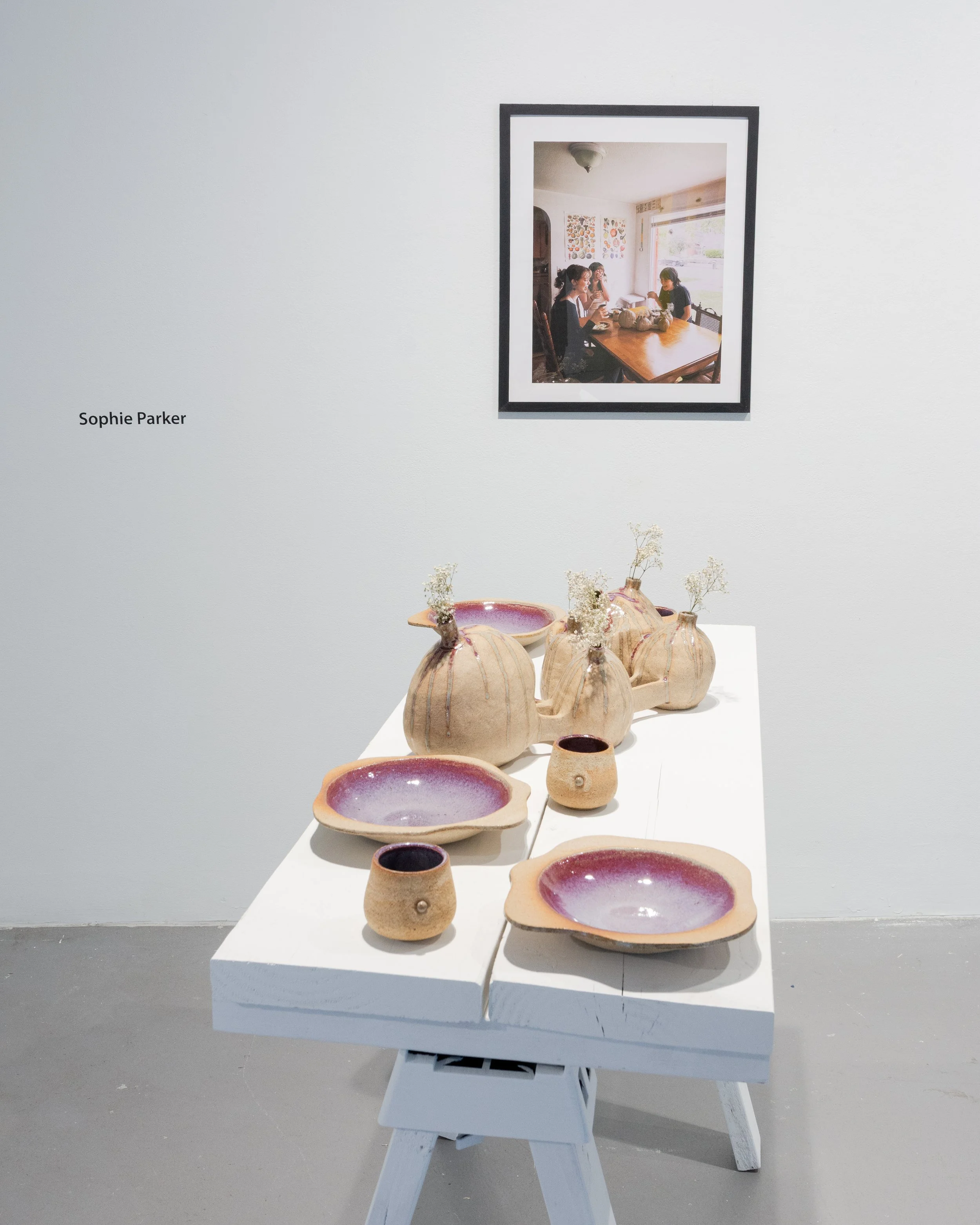
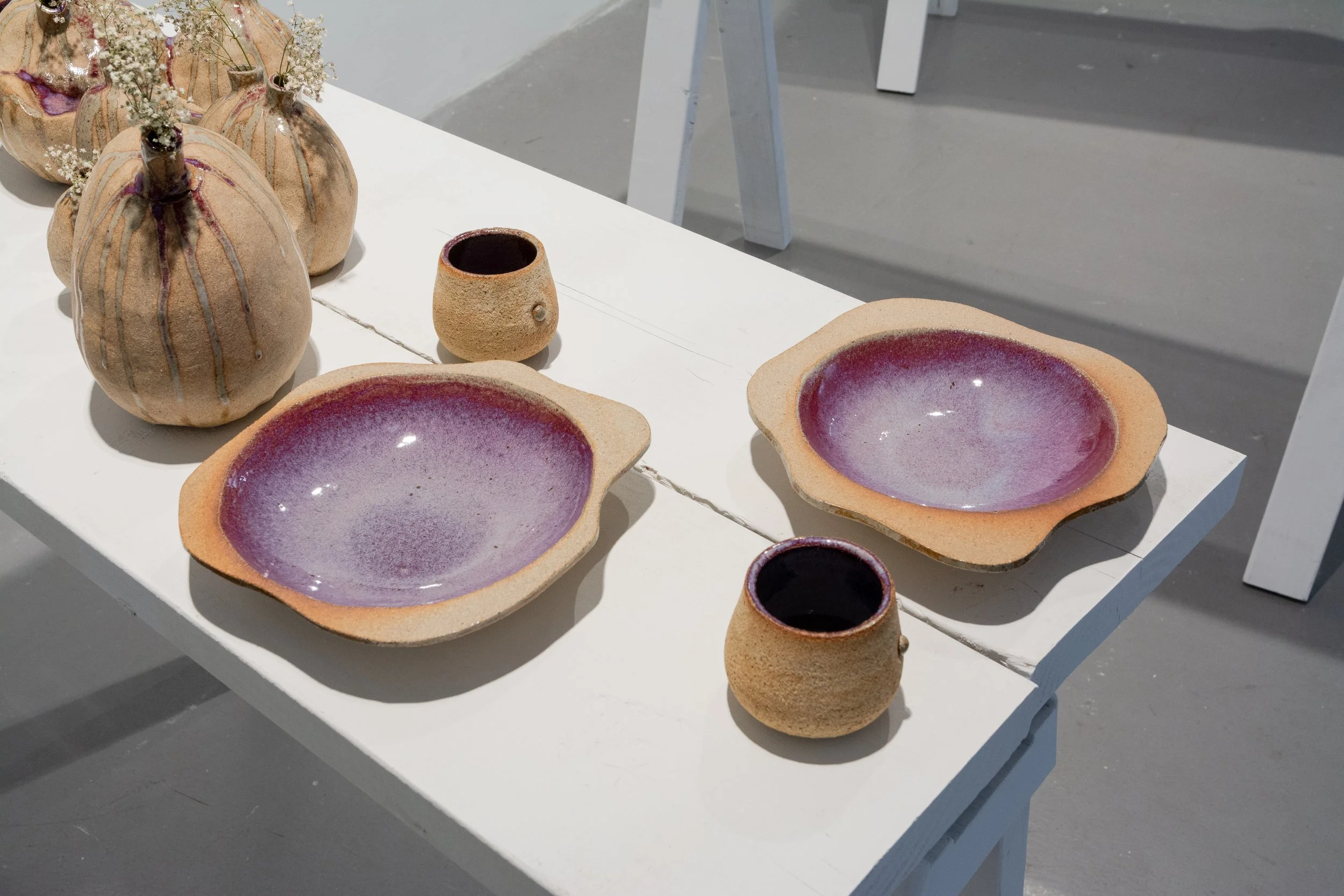
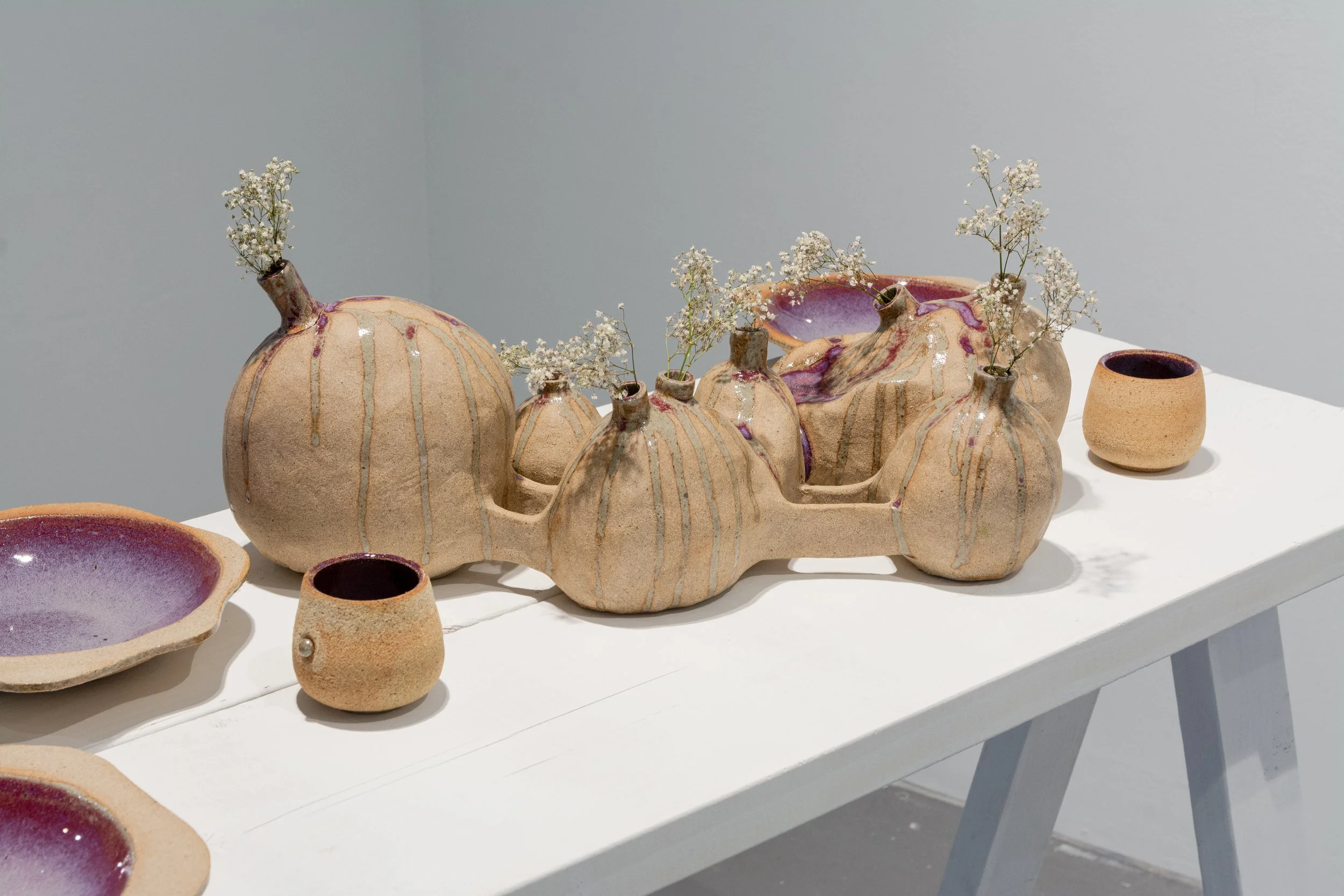
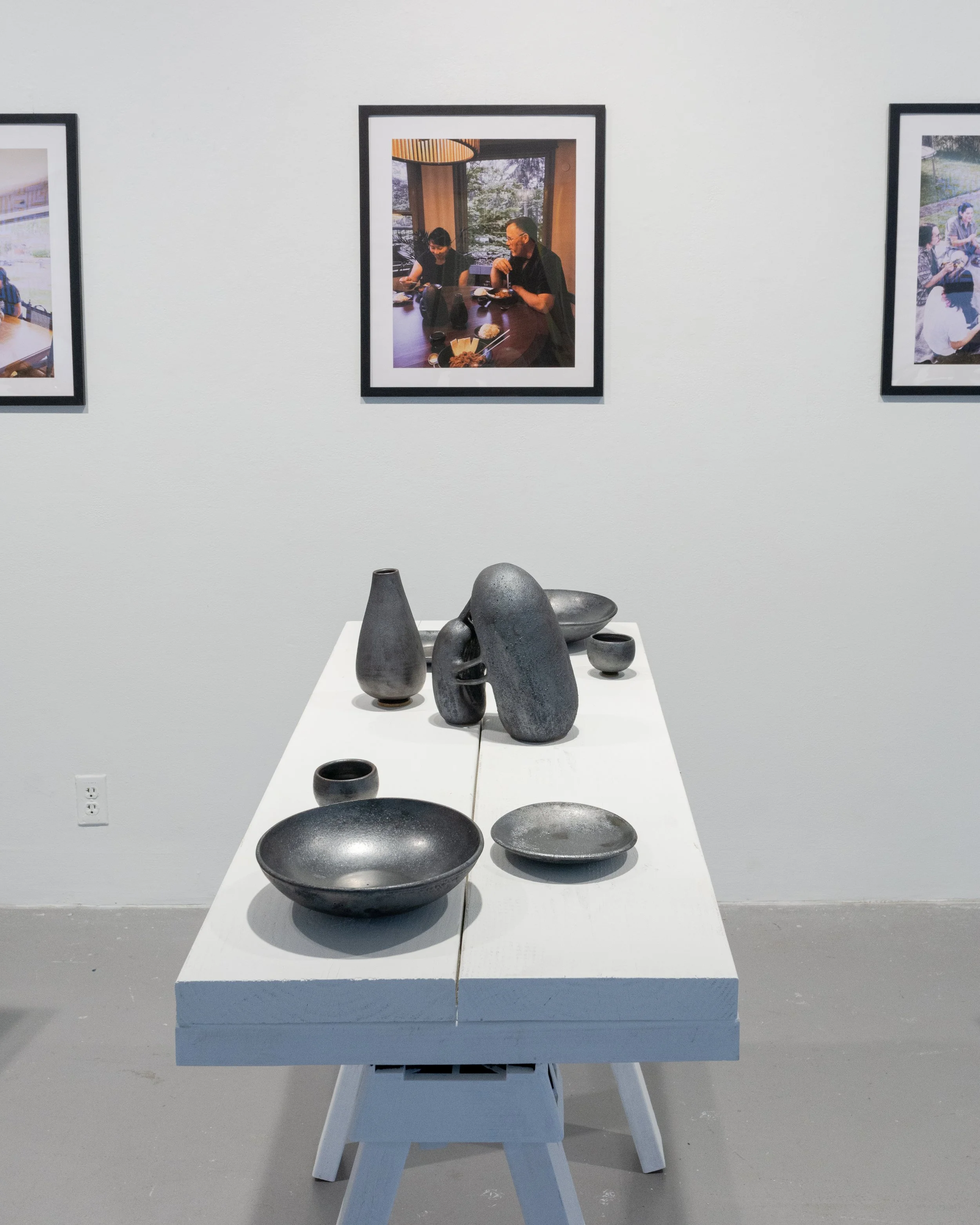
My thesis project investigates how ceramics can function as a vehicle for care, connection, and collective identity through the act of communal dining. Centered on a series of three hosted dinners with distinct communities that shape my life: my family, my friendships, and my workplace. The project combines functional ceramics, social practice, and performance to explore the relationships between objects, people, and shared experience. For each gathering, I designed and fabricated a unique set of ceramic tableware informed by my perception of the group's identity, values, and interpersonal dynamics. Through these dinners, the work examines how objects can embody emotional and social connection while creating opportunities for connection in a culture increasingly defined by isolation, productivity, and individualism.
The project emerged from an ongoing interest in the social dimensions of functional ceramics. Throughout my undergraduate education, I have been drawn to objects that exist beyond the gallery pedestal and become activated through use. Functional ceramics occupy a unique position within contemporary art, they blur distinctions between art and utility, aesthetic experience and everyday life. Rather than existing solely as visual objects, ceramic vessels have value in rituals and relationships. They are handled, shared, and integrated into daily routines. This capacity for interaction has become central to my practice and has led me to question how ceramic objects might communicate ideas that extend beyond form and surface.
As my work developed during the BFA program, I became increasingly interested in the social life of objects and the ways material culture reflects relationships. While earlier projects focused primarily on individual vessels and formal concerns, my thesis expands the scale of inquiry by considering ceramics as part of a larger social ecosystem. Instead of creating objects intended for isolated viewing, I sought to create experiences that allowed the work to be completed through participation. The dinners became a framework through which ceramics could operate not only as objects but also as catalysts for interaction, conversation, and collective memory.
The decision to work with communities that are personally significant reflects my interest in examining the relationships that shape my own identity. Each dinner brought together a different social group, and each ceramic collection was developed in response to my understanding of that community's character. Through variations in scale, form, texture, color, and functionality, the tableware became a material portrait of the people gathered around it. Some forms emphasize intimacy and interconnectedness through joined forms while others reference playfulness, structure, or care. The resulting objects do not seek to represent individuals literally but instead translate social dynamics into ceramic form.
This translation from relationship to object is central to the project's methodology. Rather than beginning with purely aesthetic concerns, the work emerges from observation, reflection, and interpersonal experience. The visual language of each table setting developed through consideration of how members of a particular group interact with one another and what values seem to define their relationships. In this way, aesthetics become inseparable from content. Decisions regarding form, surface, and arrangement are informed by social and emotional considerations, allowing the ceramics to function as both practical tools and conceptual representations.
The dinners themselves are equally important components of the work. Hosting functions as a performative act that activates the objects while emphasizing care as both a material and social practice. Preparing food, arranging a table, and creating an environment for gathering are actions often dismissed as ordinary or invisible labor. However, these activities carry significant emotional and cultural weight. By foregrounding hosting as an artistic methodology, I seek to highlight forms of labor that have historically been undervalued despite their essential role in sustaining communities and relationships.
This aspect of the project draws from feminist art histories that have examined domestic space, caregiving, and social reproduction as sites of cultural and political significance. Artists such as Mierle Laderman Ukeles challenged traditional distinctions between art and maintenance by elevating acts of care and upkeep to the status of artistic practice. Similarly, Judy Chicago utilized the dinner table as a site of collective recognition and historical visibility in her landmark work, The Dinner Party. While my project operates on a more intimate and personal scale, it shares an interest in how communal rituals and domestic activities can become meaningful artistic frameworks.
The work is also informed by contemporary social practice artists who prioritize participation and human interaction as artistic materials. Theories of relational aesthetics, particularly those proposed by Nicolas Bourriaud, provide a useful context for understanding the dinners as temporary spaces of exchange and connection. While relational practices have been critiqued for sometimes overlooking questions of power and access, they nevertheless offer a framework for considering how art can exist through social encounters rather than solely through physical objects. My project engages with these ideas while remaining grounded in the material specificity of ceramics and the personal relationships that motivate the gatherings.
At the same time, I position the work within contemporary conversations surrounding loneliness, digital communication, and the erosion of communal spaces. In an increasingly networked world, opportunities for sustained face-to-face interaction have become more limited. Social relationships are frequently mediated through technology, while economic pressures often prioritize efficiency and productivity over collective well-being. Against this backdrop, the act of gathering around a table becomes a deliberate gesture. Sharing a meal requires time, attention, and presence. It creates a temporary environment in which people can engage with one another outside of transactional structures.
The project therefore functions as a subtle critique of capitalist value systems that privilege measurable output over emotional and relational labor. Ceramics itself offers a productive counterpoint to these values. The process of making pottery is slow, repetitive, and deeply dependent on touch, patience, and care. Clay records the traces of the maker's hand and resists complete standardization. By investing substantial time in creating handmade tableware for specific communities, I emphasize forms of value that cannot easily be quantified. The work suggests that relationships, experiences, and acts of care possess significance independent of economic productivity.
Materially, the choice to work in ceramics is inseparable from the project's conceptual concerns. Clay possesses a unique ability to hold evidence of touch and human presence. Unlike industrially manufactured objects, handmade ceramics often reveal subtle irregularities that reflect individual decisions and gestures. These qualities reinforce the project's emphasis on relationships and embodied experience. Furthermore, ceramic objects occupy a paradoxical position as both durable artifacts and vulnerable possessions. While the dinners themselves are temporary events, the tableware remains as a physical record of those gatherings, preserving traces of experiences that cannot be fully captured through documentation alone.
Documentation serves an important role within the project by extending the life of the events beyond the dinners themselves. Photographs, recordings, and other archival materials function as secondary artifacts that provide access to moments of interaction while acknowledging the impossibility of fully preserving lived experience. This tension between permanence and ephemerality reflects broader questions within social practice concerning how participatory works are remembered, exhibited, and understood. In my project, documentation does not replace the experience of gathering but instead acts as evidence of relationships that unfolded through the activation of the ceramic objects.
The audience occupies a complex position within the work. The primary audience consists of the participants themselves, whose interactions complete the project. Their engagement transforms the ceramics from static objects into active components of a social ritual. A secondary audience encounters the work through exhibition and documentation, gaining access to the material and conceptual traces of the gatherings. This layered audience structure reflects my interest in how art can operate simultaneously as a lived experience and as an object of reflection. While viewers may not directly participate in the dinners, they are invited to consider their own experiences of community, care, and belonging.
Ultimately, this thesis represents a culmination of my interests in functional ceramics, social engagement, and the emotional potential of material objects. By combining handmade tableware, communal rituals, and documentation, I explore how ceramics can extend beyond utility to become vessels for collective identity and shared experience. The project argues that making and hosting are not separate activities but interconnected forms of care that shape how people relate to one another. In a cultural moment often defined by disconnection and acceleration, these gatherings create opportunities for slowness, presence, and reciprocity. Through the language of clay and the ritual of the shared meal, I seek to demonstrate how art can foster meaningful connections while preserving the intangible qualities of human relationships.
Annotated Bibliography
Bourriaud, Nicolas. Relational Aesthetics. Les Presses du Réel, 1998.
In Relational Aesthetics, Nicolas Bourriaud proposes a framework for understanding contemporary art that centers human interaction and social exchange rather than the production of autonomous objects. Bourriaud argues that artworks can function as spaces for encounter, conversation, and participation. This text has been foundational to my thesis because it provides language for understanding the hosted dinners as artistic events rather than simply social gatherings. The dinners create temporary communities through shared experiences, positioning relationships themselves as a central material of the work. While my project remains grounded in ceramics and object-making, Bourriaud's writing helped me consider how the activation of objects through communal use contributes to meaning.
Ukeles, Mierle Laderman. "Manifesto for Maintenance Art 1969!" 1969.
Mierle Laderman Ukeles' manifesto challenged traditional distinctions between artistic production and the labor required to sustain daily life. By framing acts of maintenance, caregiving, and domestic work as artistic practices, Ukeles elevated forms of labor that are often invisible or undervalued. This text has influenced my understanding of hosting as a meaningful artistic methodology. Preparing meals, organizing gatherings, and creating spaces for others are forms of care that require significant labor but are rarely recognized as creative acts. Ukeles' work helped me situate hosting within a broader feminist discourse that values maintenance and relational labor as important cultural contributions.
Chicago, Judy. The Dinner Party. Garden City, NY: Anchor Press/Doubleday, 1979.
The Dinner Party is a landmark feminist artwork that uses the format of a ceremonial banquet table to honor historically overlooked women. Through handcrafted ceramics, embroidery, and collaborative labor, Judy Chicago transformed the dining table into a site of recognition and collective memory. This work serves as an important precedent for my thesis because it demonstrates the symbolic power of tableware and communal dining within contemporary art. While my project focuses on personal communities rather than historical figures, Chicago's integration of craft, domesticity, and social gathering has informed my thinking about how objects can embody identity and create meaningful collective experiences.
Brown, Brené. Braving the Wilderness: The Quest for True Belonging and the Courage to Stand Alone. Random House, 2017.
In this book, Brené Brown explores the human need for belonging and meaningful connection in an increasingly fragmented society. She argues that genuine belonging emerges through vulnerability, authenticity, and shared experiences rather than conformity. This text has helped me articulate why communal gatherings feel especially significant in contemporary culture. My thesis seeks to create opportunities for connection through shared meals and handmade objects, and Brown's writing reinforced my interest in examining how rituals of gathering can strengthen relationships and foster a sense of community.
Adamson, Glenn. Thinking Through Craft. Berg Publishers, 2007.
Glenn Adamson examines craft as a mode of thinking rather than simply a category of objects. He argues that craft processes generate knowledge through material engagement, labor, and use. Adamson's discussion of function has been particularly influential in my ceramic practice because it challenges assumptions that utility diminishes artistic value. His writing helped me better understand the conceptual potential of functional ceramics and their ability to carry social, emotional, and cultural meaning. This perspective supports my thesis by framing handmade tableware as both practical tools and critical artistic objects.
Bishop, Claire. Artificial Hells: Participatory Art and the Politics of Spectatorship. Verso, 2012.
Claire Bishop critically examines the history of participatory art and questions assumptions that social engagement automatically produces positive outcomes. Through case studies and historical analysis, she investigates the relationship between participation, audience, and artistic value. This text has been important in helping me critically evaluate the social dimensions of my project. Bishop's writing encouraged me to consider not only the benefits of participation but also the complexities of audience engagement, documentation, and the ethics of working with communities. Her critiques have helped me position my work more thoughtfully within contemporary social practice.
Jones, Amelia. Body Art/Performing the Subject. University of Minnesota Press, 1998.
Amelia Jones explores how performance-based art creates meaning through lived experience, embodiment, and interpersonal encounter. She argues that the significance of performance often resides in its relational and experiential qualities rather than in a permanent object. This text has informed my understanding of the dinners as performative events that are activated through participation. While ceramics remain central to my practice, Jones' writing helped me consider how the experiences surrounding the objects contribute to the work's meaning. Her discussion of documentation has also been valuable when thinking about how photographs and artifacts function as traces of ephemeral social interactions.
Exhibition: Feast: Radical Hospitality in Contemporary Art, Smart Museum of Art, University of Chicago, 2012.
This exhibition examined the role of food, hospitality, and communal gathering in contemporary art through the work of artists who use meals and social participation as artistic media. The exhibition highlighted how acts of hosting can generate dialogue, community, and critical reflection. Researching this exhibition helped me contextualize my own project within a lineage of artists who use shared meals as sites of artistic inquiry. It reinforced my understanding of hospitality as both a social practice and a conceptual framework through which questions of care, community, and participation can be explored.
Marx, Karl, and Engels, Friedrich. The Communist Manifesto. 1848.
The Communist Manifesto critiques capitalist economic systems and examines how labor, social relations, and human life become shaped by the pursuit of profit. Marx and Engels argue that capitalism alienates individuals from their labor, from one another, and from meaningful forms of collective life. While my thesis is not explicitly political, this text has provided a framework for understanding the social conditions that inform my project. The dinners and handmade tableware function as a response to contemporary systems that often prioritize productivity, efficiency, and individual achievement over community and care. Marx's analysis of alienation has helped me think about how communal rituals, shared meals, and acts of making can create moments of connection that resist these isolating tendencies.
Pollan, Michael. The Botany of Desire: A Plant's-Eye View of the World. Random House, 2001.
In The Botany of Desire, Michael Pollan explores the reciprocal relationship between humans and plants, arguing that domesticated species evolve alongside human desires and cultural practices. Through discussions of food, agriculture, cultivation, and consumption, Pollan demonstrates how human relationships with plants shape social and cultural life. This text has influenced my thesis by encouraging me to think about food as more than sustenance. Shared meals are complex cultural rituals that connect people through history, labor, environment, and care. Pollan's writing deepened my understanding of how food functions as a social connector and how the preparation and sharing of meals can become meaningful acts of relationship-building. His attention to cultivation and interconnected systems also parallels my interest in how communities are formed, maintained, and nurtured over time.
Eshun, Ekow. "Theaster Gates on Waking Up That Energetic Life." Aperture, January 16, 2026.
In this interview, ceramic artist and social practitioner Theaster Gates discusses the relationship between craft, community, archives, labor, and social responsibility. Gates describes his concept of "Afro-Mingei," which combines African American cultural traditions with the Japanese philosophy of mingei, emphasizing the beauty and significance of handmade functional objects. Throughout the conversation, he argues against the separation of craft and conceptual art, highlighting how materials, objects, and communal spaces can hold social, historical, and spiritual meaning. Gates also discusses his commitment to creating spaces centered on gathering, reflection, and collective care rather than commercial exchange.
This interview has been especially influential to my thesis because it articulates many of the values that underpin my project. Gates's belief that functional objects can carry cultural and emotional significance resonates with my use of ceramic tableware as material representations of community. His discussion of creating spaces that prioritize gathering, healing, and connection directly relates to my hosted dinners as acts of care and social engagement. I am particularly interested in his assertion that contemporary culture often creates isolation through capitalist systems and that craft offers an alternative rooted in purpose, labor, and human connection. His practice has helped me think about how ceramics can exist simultaneously as functional objects, social catalysts, and carriers of collective meaning.